
Why do some wine bottles have a glass stopper?
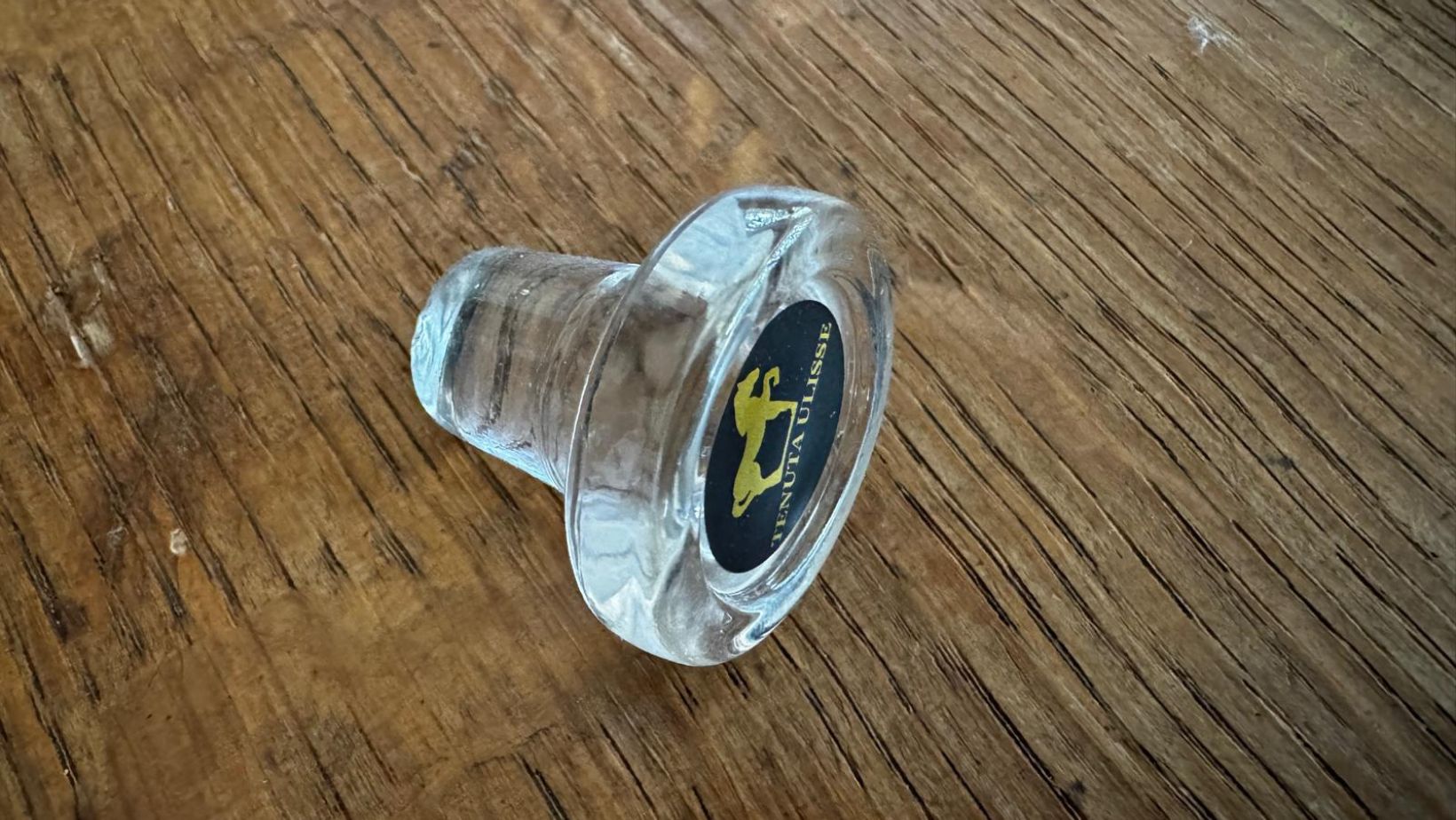
You may have noticed an unusual detail when buying wine: the bottle’s stopper isn’t the classic cork, but glass.
In recent years, this type of closure has been becoming increasingly popular. Even in our online wine shop, some labels feature bottles with glass stoppers. At this point, it’s natural to ask: why do some wine bottles have a glass stopper?
In this article, we explain:
• why glass stoppers are used
• how they differ from traditional corks
• which types of wine are best suited for glass stoppers
The real reasons why some wine bottles have a glass stopper
Let’s explore why some producers choose to seal certain wine bottles with glass stoppers. Behind this choice are functional and practical reasons, as well as aesthetic considerations.
• Functional Reasons
The glass stopper represents a modern and highly effective solution for ensuring a neutral closure. Its main function is to preserve the wine’s integrity over time without interfering with its properties.
Glass is a naturally inert material:
• it does not chemically react with the wine
• it does not release or absorb substances
• it does not alter or absorb aromas
This makes it an ideal closure system for keeping the wine exactly as it was intended in the winery.
NO RISK OF CORK TAINT
One of the most feared defects in the wine world is the so-called “cork taint,” mainly caused by a substance called TCA (trichloroanisole). This molecule can develop in cork and spread easily, contaminating the wine and causing effects such as: loss or reduction of natural aromas, the appearance of unpleasant odors, disruption of the overall balance, and sometimes even changes in color.
Using a glass stopper eliminates this risk entirely. Glass is a completely inert material: it does not promote TCA formation, does not absorb it, and does not transfer it to the wine.
PRESERVATION OF THE WINE’S AROMATIC PROFILE
Another key feature of the glass stopper is its ability to protect the wine’s aromatic profile, keeping its identity intact over time.
Thanks to its perfect neutrality, a glass stopper allows the wine to:
• maintain its original, varietal, and primary aromas
• preserve the purity of its expression
Unlike cork, glass does not allow micro-oxygenation, the slow and controlled passage of oxygen that, over time, can modify the wine by developing secondary and tertiary aromas. These aromas may be more complex but often less fresh.
By preventing this exchange, the glass stopper helps maintain an aromatic profile that is truer to the original, keeping the wine direct, clean, and recognizable in its initial characteristics.
PRESERVATION OF WINE FRESHNESS
Another major advantage of the glass stopper is its ability to preserve the wine’s freshness over time. Thanks to its airtight closure and the absence of oxygen exchange, the wine retains its original characteristics without undergoing premature oxidation or modification.
This means:
• maintaining aromatic liveliness and the wine’s delicate flavors
• preserving a fresh sensation on the palate
In this way, the glass stopper not only protects the wine’s aromas but also ensures that it retains all its freshness and vitality, reaching the consumer with maximum quality and true fidelity to the original character intended by the producer.
• Practical Reasons
Let’s now look at some practical reasons why the glass stopper is often preferred over other types of closures.
EASY TO RE-USE
The glass stopper allows the bottle to be resealed with ease, maintaining an airtight closure even after opening. This is particularly useful for those who want to enjoy the wine in multiple sittings.
NO CORKSCREW NEEDED
Unlike traditional corks, a glass stopper can be opened without any tools. This makes the tasting experience more immediate and convenient.
• Aesthetic Reasons
The choice of a glass stopper is often driven not only by technical considerations but also by aesthetic and marketing factors.
GREATER ELEGANCE, QUALITY AND DIFFERENTIATION
A glass stopper gives the bottle a sense of elegance and refinement, turning the wine into a visually polished, high-quality product. Compared to traditional corks, glass conveys a sense of modernity, making the bottle more attractive and easily recognizable to consumers.
Additionally, the glass stopper serves as a differentiating element compared to conventional bottles, signaling innovation and exclusivity. This not only enhances the perceived value of the wine itself but also strengthens the brand identity, captures attention, sparks curiosity, and increases the overall perceived quality of the product.
Main difference between cork and glass stoppers
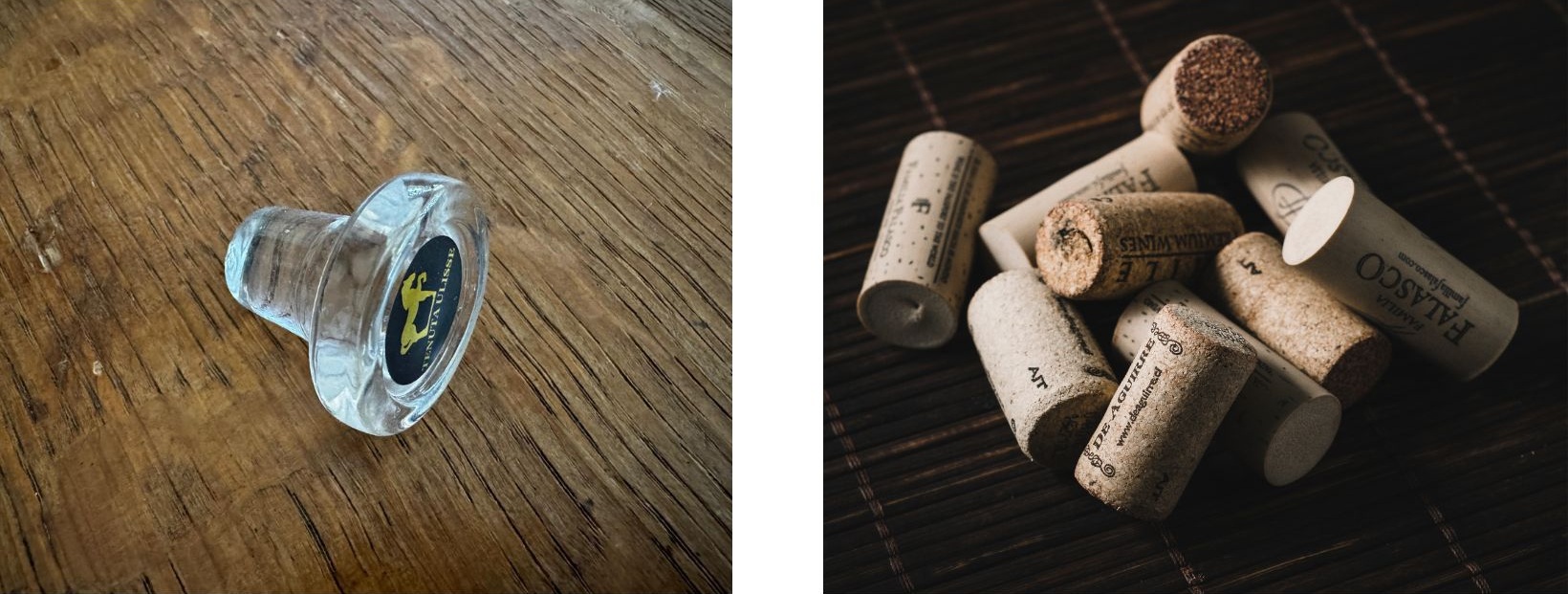
It’s important to clarify from the outset that a glass stopper is not necessarily “better” than cork: they are simply two types of closures with different characteristics, advantages, and uses, designed to meet different needs and, as we will see, suitable for different types of wine. Each system has specific strengths that make it more appropriate for certain wine styles.
The main aspect that distinguishes the two closures is oxygen protection. Cork allows for slow and consistent micro-oxygenation of the wine. This controlled process can enhance the wine’s evolution and help develop more complex aromas over time.
Glass, on the other hand, creates an airtight closure with no oxygen exchange. This feature helps keep the wine fresh and aromatically stable, faithfully preserving the primary and varietal notes as intended by the producer.
In other words:
• Cork supports the wine’s evolution over time
• Glass ensures more immediate preservation, consistent with the wine’s original characteristics
This fundamental difference explains why the choice of closure depends primarily on the type of wine.
Which types of wine are best suited for a glass stopper?
Based on what we’ve seen so far, we can summarize as follows:
• Cork stopper: ideal for wines meant for long aging, designed to develop complex aromas over time. The natural micro-oxygenation allowed by cork supports the evolution of the aromatic profile and gradual maturation of the wine.
• Glass stopper: perfect for wines intended to be consumed immediately, which do not require further aging. Glass preserves freshness and primary aromas, keeping the wine’s original character intact.
Glass stoppers are most commonly used for:
• Fresh white wines, meant to be enjoyed within a short time
• Young and light rosé wines, which focus on liveliness and fragrance
For structured red wines meant for long aging, glass stoppers are not recommended, as the lack of micro-oxygenation does not support the development of the complex aromatic profiles typical of these wines.
If you liked our article and if you want to continue to receive news, updates and curiosities about the world of wine, subscribe to the Wineshop.it wine newsletter. Lots of content and offers await you.


 Loading...