
Is it correct to put your finger in the bottom of a wine bottle while serving?
In wine service, there’s a gesture that is often imitated: placing the thumb (or a finger) into the concave indentation at the base of the bottle, known in technical terms as the punt. It’s an iconic gesture, copied even by people with little experience, sometimes jokingly, with the idea of looking more elegant or more like an “expert.”
But what does wine etiquette actually say about it? Is it a codified gesture? Is it a recommended practice? In short, is it proper to insert a finger into the indentation on the bottom of a wine bottle during service?
In this article, we’ll clear up one of the most debated (and misunderstood) details of wine service. And we bet you’ll discover something you didn’t know.
What is the purpose of the indentation on the bottom of a wine bottle?
Before going into the details of the issue, it’s important to clarify what the concave bottom of wine bottles is used for, a topic we have already discussed on our wine blog.
The reasons why this feature was originally introduced are mainly technical and functional:
• improve the bottle’s stability
The concave base helps make the bottle more stable when placed on flat surfaces, reducing the risk of wobbling or instability.
• distribute internal pressure more effectively
The concave shape allows for better distribution of internal pressure, especially in sparkling wines, reducing the risk of the glass breaking.
• collect any sediment
In more full-bodied or aged red wines, the indentation helps concentrate solid deposits at the bottom of the bottle, making them easier to manage when pouring the wine.
In short, the concave bottom was not originally designed as a grip to facilitate wine service, but rather as a technical solution intended to improve the bottle’s strength, safety, and preservation.
Why put your finger in the bottom of a wine bottle during service?
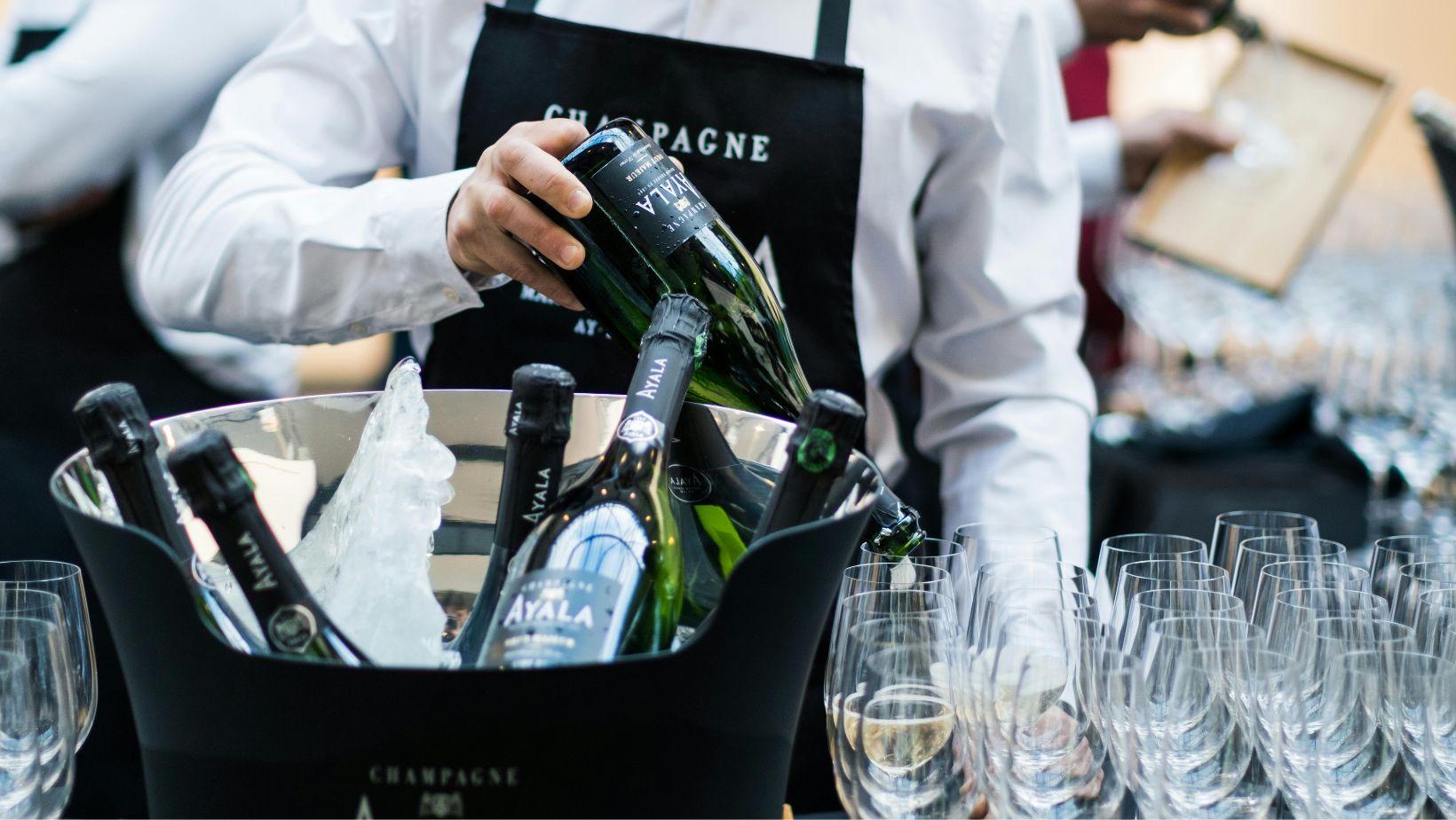
It’s natural to wonder why many people place their thumb into the bottle’s indentation while pouring wine, with the palm supporting the rest of the bottle.
Over time, the indentation has in fact been “used,” especially in professional settings, as an anchoring point intended to make the serving operation more stable and controlled, at least according to supporters of this practice.
The main benefits attributed to this gesture are:
• greater bottle stability
Placing a finger in the indentation creates a balance point that may help support the weight of the bottle more effectively.
• more precise control while pouring
This grip may allow the server to adjust the bottle’s tilt with greater sensitivity, making the wine flow more smoothly and steadily.
• reduced risk of sudden movements
The “anchor” in the base helps limit sudden or awkward movements during pouring.
This type of grip became especially widespread during the second half of the twentieth century, finding broad use among waitstaff and in the restaurant industry, eventually becoming a fairly common gesture even outside professional settings.
In reality, not all experts agree on the actual necessity or usefulness of this technique. According to part of the wine and service world, inserting a finger into the punt serves more of an aesthetic purpose than a practical one.
For a stable grip, some argue, it is enough to support the bottle by placing the palm of the hand under its base, ensuring the same level of control without resorting to additional gestures.

So, what does etiquette actually say?
Putting your finger in the bottom of a wine bottle while serving: what does etiquette say
First of all, wine etiquette does not formally codify this gesture, nor does it include it among the official rules of wine service.
However, this does not mean it is forbidden: rather, it is an optional serving technique, linked to the skill and training of the person serving the wine, and not a rule of etiquette in the strict sense. Its use, therefore, is allowed and remains a personal or professional choice.
In recent years, more and more experts have tended to consider it inelegant or not entirely in line with proper etiquette, for three main reasons:
• it is not a codified rule
Etiquette does not explicitly prescribe this gesture, so it is not part of the formal standards of service.
• it can appear unnatural
If performed in a stiff or exaggerated way, the gesture risks looking affected rather than spontaneous and elegant.
• risk of ostentatious imitation
In some cases, it is artificially reproduced to “look sophisticated,” losing its practical function and turning into a theatrical pose.
In short, there does not seem to be a clear “right” or “wrong”: what truly matters is the overall quality of the service. Regardless of the grip used, wine should always be served with discretion, smoothness, and precision.
If you liked our article and if you want to continue to receive news, updates and curiosities about the world of wine, subscribe to the Wineshop.it wine newsletter. Lots of content and offers await you!


 Loading...