
Why do long-aging wine bottles have longer corks?
Today we want to reveal a curiosity that few people know: did you know that bottles of wines meant for aging often have longer corks? It’s a detail that usually goes unnoticed, but it is actually very important.
The length of the cork is never random. The choice of a longer or shorter cork mainly depends on how long the wine will spend in the bottle.
In this article, from our Wine Blog, we will first look at why the length of the cork is essential, and then why wines intended for aging require longer corks.
What is the length of cork stoppers in wine bottles?
Before answering the main question of our article, it is helpful to clarify two key aspects that will help us better understand the topic.
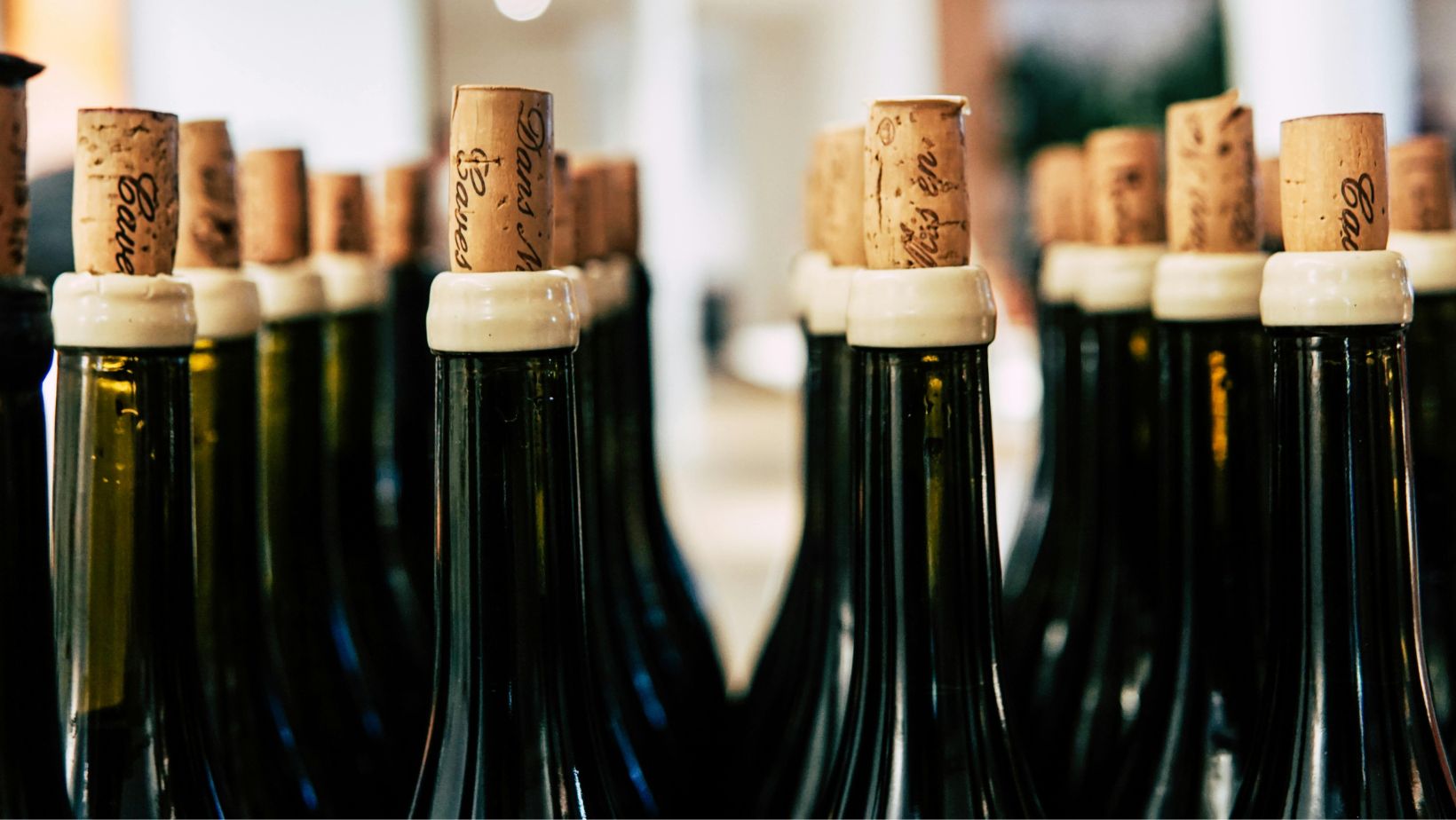
Let’s start with the length of cork stoppers in wine bottles. In general, corks for standard 750 ml bottles measure between 44 and 49 mm. In the case of magnums and larger formats, the length increases and can reach 70 mm or more.
It is important to know that even 750 ml bottles can have longer corks, close to 70 mm or in any case longer than the standard. This happens when the wine is intended for long aging or requires greater protection over time.
Why the length of cork stoppers in wine bottles matters
The second aspect to clarify is why the length of the cork matters so much. The length of the cork is not just an aesthetic detail, but a fundamental technical element for preserving the wine.
The length of the cork is essential because it affects the:
Sealing of the bottle
The longer the cork, the greater the surface area in contact with the neck of the bottle. A larger surface allows for a more effective and stable seal over time, reducing the risk of air infiltration.
Protection from oxidation
Wine is sensitive to oxygen. The longer the cork, the more effective the barrier against excessive oxygen entering the bottle, which could oxidize the wine and compromise its aromas and quality. A limited and controlled amount of oxygen, on the other hand, allows the wine to evolve in a balanced and controlled way.
Ease of opening
The longer the cork, the easier it is to extract, because it provides a larger surface for the corkscrew to grip. The spiral penetrates more deeply, reducing the risk of breakage or crumbling. This results in a safer, smoother, and more effective opening.
Perceived quality
A long, compact, and well-preserved cork immediately conveys attention to detail and care in production, helping to communicate a sense of higher quality and value of the wine from the very moment it is uncorked.
Why are corks in long-aging wine bottles longer?
What we have seen so far helps us understand why, in general, the more a wine is intended for aging, the longer the bottle’s cork will be.
On the other hand, young wines, meant for quick consumption, are usually sealed with shorter corks. Since they do not require the same level of long-term protection, this type of wine does not need the sealing and stability provided by a longer cork.
At this point, let’s look in more detail at why a longer cork is recommended for wines intended for long aging.
A longer cork ensures:
Better sealing
For wines intended for long aging, a reliable closure is essential. A longer cork provides a more stable and durable seal over time, which is crucial for preserving a wine that will remain in the bottle for many years.
Greater protection from oxidation
Long-aging wines are particularly delicate and sensitive to oxygen. A long cork acts as a more efficient barrier against unwanted air entry. At the same time, it allows only a slight passage of oxygen, which is important for the wine’s harmonious and controlled evolution.
Greater ease and safety in opening
In long-aging wines, the cork remains in the bottle for many years. Over time, the cork can harden or dry out slightly, losing some of its original elasticity. This makes extraction more delicate, because a fragile or too-short cork could break or crumble when using the corkscrew. A longer cork, on the other hand, facilitates the insertion of the corkscrew and better distributes the force during extraction, reducing the risk of breakage or crumbling and making opening smoother and more precise.
Higher perceived quality
A long cork suggests quality and value right from the moment of uncorking. In long-aging wines, surrounded by an aura of prestige and charm, the greater length of the cork becomes part of the sensory experience, making the act of opening the bottle a gesture that anticipates the elegance and complexity of the wine itself.
In short, now you know a small detail about wine bottles that very few people are aware of!
If you liked our article and if you want to continue to receive news, updates and curiosities about the world of wine, subscribe to the Wineshop.it wine newsletter. Lots of content and offers await you.


 Loading...