



Why are some wine bottles heavier than others?
Anyone who has ever held a wine bottle will have noticed that some are heavier than others. The differences in weight can be quite striking.
It is true that larger-format bottles weigh more, simply because they are bigger and hold more wine. But the truly interesting aspect is something else: even bottles of the same size can vary significantly in weight.
Naturally, this raises the question: why? In these cases, the weight of the bottle does not depend on its capacity, nor on the wine inside, but on one specific factor: the thickness of the glass used to make it. In other words, the thicker the glass, the heavier the bottle.
In this article, you will discover:
• why some wine bottles have thicker glass
• which wines use heavier bottles and for what reasons

Why some wine bottles have thicker glass and are heavier
Below, we will analyze the two main reasons why some wine bottles are made with thicker glass and, as a result, are heavier than others.
1. Greater Strength and Safety
One of the main reasons some bottles are heavier is the mechanical strength of the glass. Mechanical strength refers to the ability of a material, in this case glass, to withstand internal or external forces and stresses without breaking. This property is essential to ensure the integrity of the bottle at different stages.
For wine bottles, this characteristic becomes even more important because the container must protect a delicate product, sometimes under demanding conditions.
Specifically, mechanical strength indicates how well the glass can withstand:
• internal pressure
• impacts during transport or handling
• the weight of other bottles in cellars or warehouses
• stress over time
In short, the thicker the glass, the greater its mechanical strength. This results in bottles that are safer and more reliable, but also inevitably heavier.
2. Marketing and Perception of Quality
The weight of a bottle is not important only for the safety of the wine, it also plays a key role in the perception of prestige and quality. Consider this: when you handle a heavier bottle, even before tasting its contents, the wine tends to be perceived as more valuable and important. This association is not accidental: our brains unconsciously link weight to value.
For this reason, many producers of high-end wines choose thicker glass and more substantial bottles not only to protect the product, but also as a branding and marketing strategy. Heavy glass becomes a signal that communicates prestige, care, and attention to detail, helping a wine stand out from others.
In essence, a heavier bottle immediately conveys the idea of superior quality, creating a positive perception even before the wine is poured into the glass.
Which types of wine use heavier bottles
Let’s now look at the types of wine that are typically found in heavier bottles, based on what we’ve discussed so far.
1. Sparkling Wines
The first type of wine that requires heavier bottles is sparkling wine. You can easily notice it simply by holding a bottle: compared to others, it is significantly thicker and heavier.
For sparkling wines, the greater weight of the bottle is not an aesthetic choice, but a real technical necessity. During secondary fermentation, a high internal pressure develops, which can reach 5–6 atmospheres.
For this reason, the bottle is made with thicker, more resistant glass. In addition, the bottom has a pronounced concavity, which helps distribute the pressure more evenly and improves the overall structural stability. This significantly reduces the risk of breakage.
To withstand these conditions, an empty sparkling wine bottle can weigh over 1 kg, up to around 1.5 kg, while a standard still wine bottle typically weighs about 500 grams, roughly half as much.
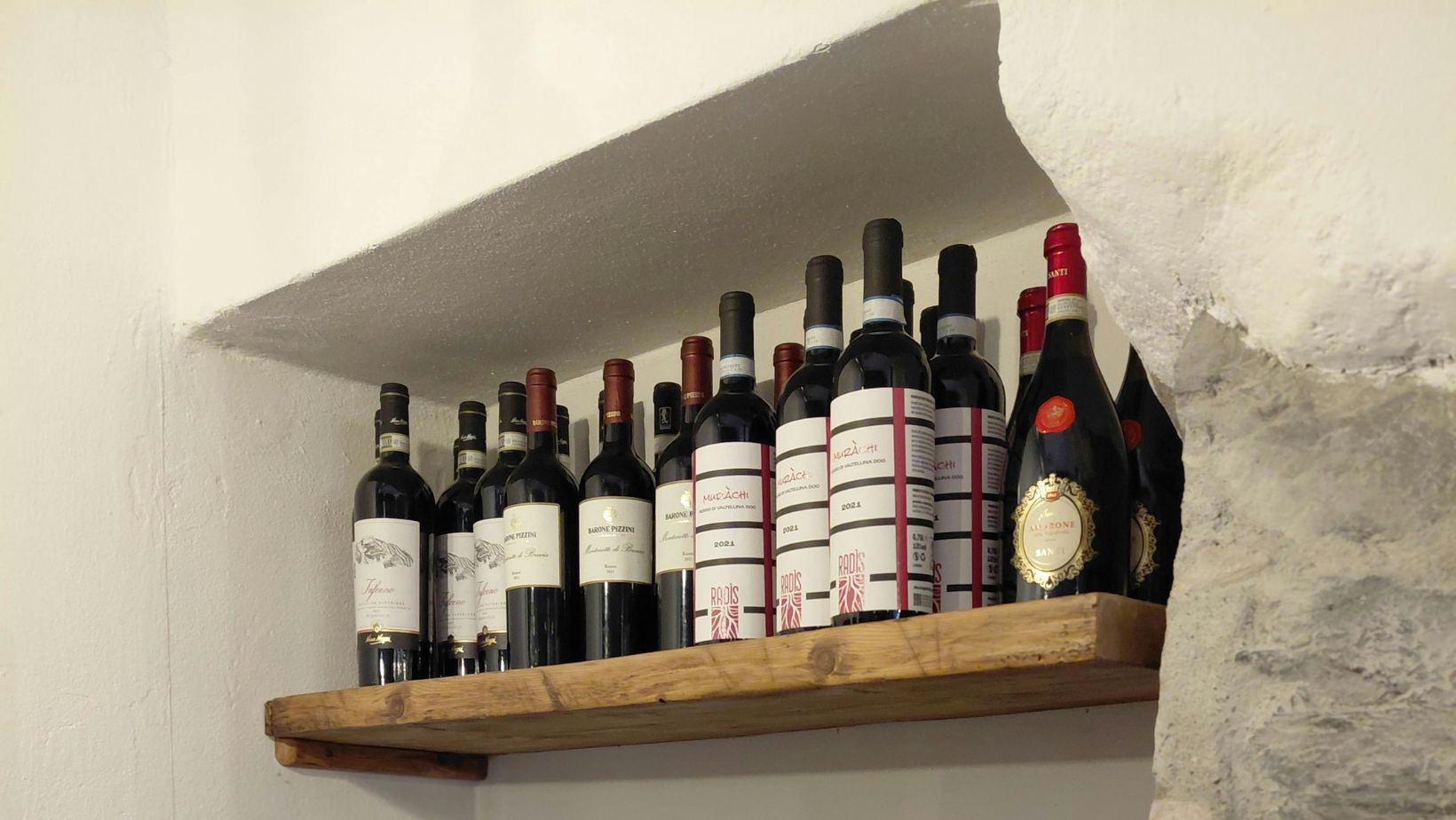
2. Aged Red Wines
Another type of wine that often comes in heavier bottles is aged red wines.
In this case, the greater weight is not accidental, but primarily linked to long-term storage needs. These wines can remain in the cellar for many years and require a solid, durable bottle to protect them throughout their aging process.
Thicker glass provides greater protection against impacts, temperature fluctuations, and external stresses, helping preserve the integrity of the wine over time.
The concave bottom also plays an important role. It is not only structural but also facilitates the sedimentation of residues. Over the years, natural deposits form in red wines. The concave shape allows these sediments to settle more neatly, preventing them from dispersing into the liquid when the wine is poured.
Creating this concavity requires the bottom to be more carefully crafted and often reinforced, which uses more glass than a flat base. This is another reason why these bottles are generally heavier.
3. Collector’s Wines
A final type of wine that often stands out for its particularly heavy bottles is collector’s or high-end wines.
Unlike sparkling wines or aged reds, the greater weight here is not always tied to a real technical need, but mainly to positioning and branding strategies. The bottles are designed with thick glass, refined shapes, and sometimes distinctive features such as numbering, engravings, or unique designs.
A heavier bottle immediately conveys a sense of value and prestige, influencing the consumer’s perception even before tasting the wine. The weight thus becomes an integral part of the experience, reinforcing the idea of an exclusive, high-quality product.
This explains all the reasons why some wine bottles are indeed significantly heavier than others.
If you liked our article and if you want to continue to receive news, updates and curiosities about the world of wine, subscribe to the Wineshop.it wine newsletter. Lots of content and offers await you.


 Loading...