





Why don’t 1-liter wine bottles exist?
As often happens on our wine blog, we answer the questions you send us through our social media channels or by email.
In recent days, we received a particularly interesting one, and the answer is far from obvious: why don’t 1-liter wine bottles exist?
Indeed, whether in brick-and-mortar wine shops or online wine stores, it almost seems as if the 1-liter format simply doesn’t exist. But is that really the case? And if we rarely see it, what’s the reason?
Is it a matter of law? Tradition? Or perhaps commercial and practical considerations?
In our article, we shed light on this topic and reveal something you (perhaps) didn’t know about wine bottle sizes.
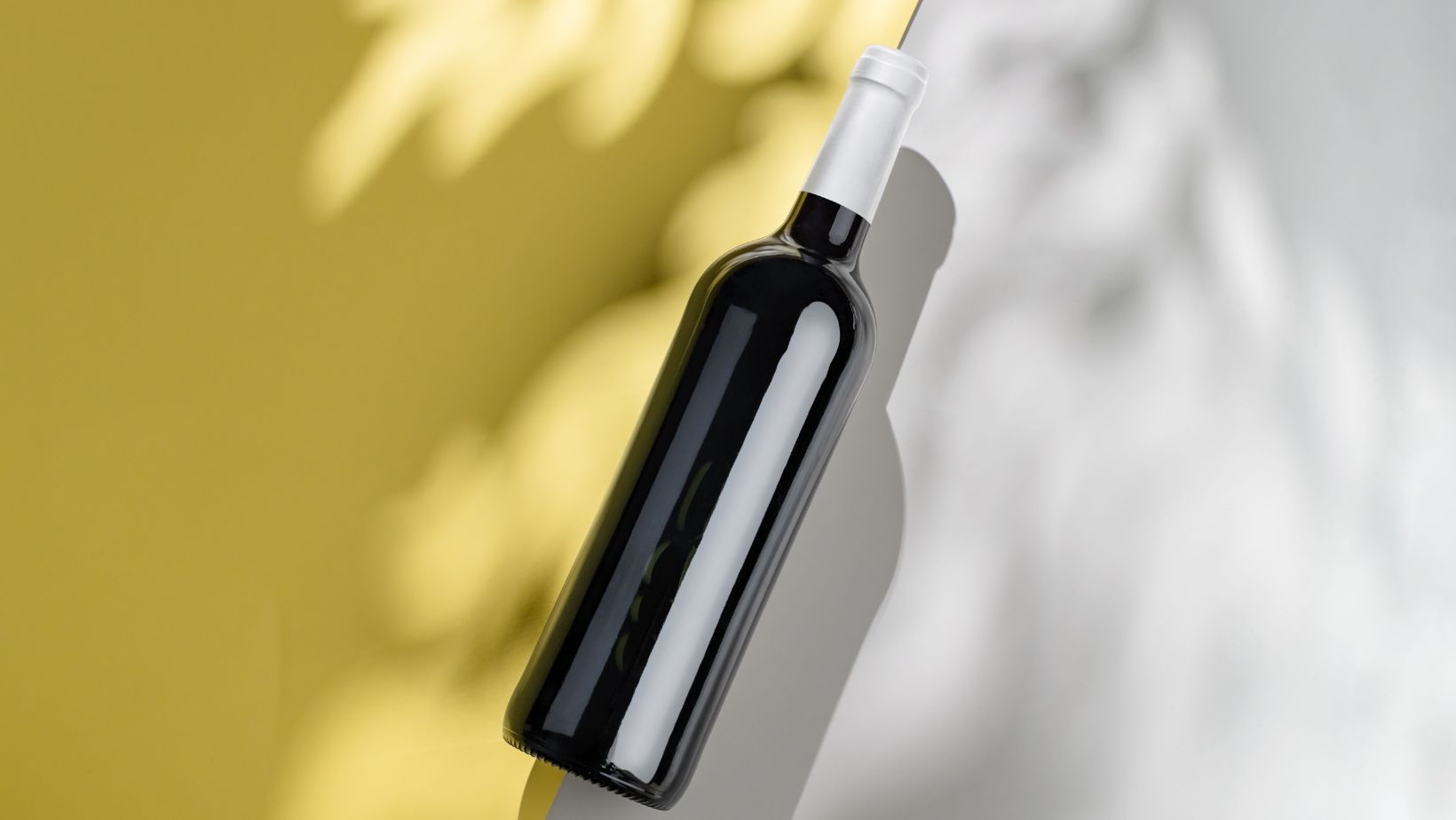
1-Liter Wine Bottles: Do They Exist or Not?
It’s a question that intrigues many wine lovers: do 1-liter wine bottles actually exist or not?
Looking at the shelves of wine shops or online wine shops, the dominant format is undoubtedly the 750 ml (75 cl) bottle. One-liter bottles seem almost impossible to find, so much so that some people even believe they are not allowed by law.
But the reality is quite different.
One-liter bottles do exist and are perfectly legal.
They are not a prohibited or non-compliant format.
European legislation on the nominal quantities of prepackaged products (Directive 2007/45/EC) also includes the 1-liter format among those permitted for wine, with the sole exception of sparkling wines, for which the 1-liter size is not included among the allowed capacities.
Yet, despite being legal, 1-liter bottles are very rare in the wine market.
Are 1-Liter Wine Bottles Legal in Italy?
This is another very common question. Based on what we’ve written, we can say that: yes, 1-liter wine bottles are perfectly legal in Italy as well. As an EU Member State, Italy complies with European regulations.
Appellations (DOC, DOCG, IGT) may provide for more specific or stricter rules regarding the permitted bottle sizes. However, the 1-liter format is almost always included among those allowed.
So, the 1-liter size is also permitted in Italy, but it is used far less than the standard 75 cl format, which dominates the market.

Why Are Wine Bottles 75 cl?
You’re probably wondering, rightly so, why most wine bottles are 750 ml (75 cl) and not 1 liter.
The 75 cl format is today the international standard for wine, but its origin does not have a single, certain and indisputable explanation. Over time, several theories have emerged that together help to understand how this measurement became established.
The most widely accepted hypotheses are:
• 75 cl as a Limit for Glassblowers
One of the most intriguing explanations for the origin of the 75 cl bottle is linked to the art of glassmaking.
Before the advent of industrial machinery, bottles were handmade using the technique of blowing molten glass. The size of the bottle was not determined by a precise standard but largely depended on the strength and lung capacity of the craftsman.
With a single blow, master glassblowers could generally produce bottles with a capacity between roughly 65 and 75 centiliters. Exceeding that limit was difficult. It is therefore possible that, for reasons of production uniformity, the largest size easily achievable by glassblowers, 75 cl, was gradually adopted.
There are no documents that definitively confirm this theory, but it is plausible that the technical limits of the time played a role in establishing this format.
• 75 cl to Align with the United Kingdom’s Commercial Standards
Another very plausible explanation for the origin of the 75 cl bottle relates to historical trade with the United Kingdom, which was once the main market for European wine.
The British used the imperial gallon as a unit of liquid measurement, equal to about 4.5 liters. To facilitate trade and simplify the calculation of volumes and costs, a bottle size was sought that would easily fit into round multiples of this unit.
This led to the idea of organizing wine into cases of 6 or 12 bottles, so that the total volume corresponded to one or two gallons:
• 6 bottles of 0.75 L, 4.5 liters (1 gallon)
• 12 bottles of 0.75 L, 9 liters (2 gallons)
In this way, each case contained a “round” volume, ideal for transport, sale and accounting.
The 75 cl bottle format thus originated as a practical solution to the needs of the United Kingdom market, and over time it became the international standard. Even today, wine is often sold in cases of 6 or 12 bottles…

• 75 cl to Make Calculations Easier for Innkeepers
Another hypothesis about the origin of the 75 cl bottle concerns the practical needs of traditional inns.
According to this theory, the 75 cl format was chosen because it perfectly matched the amount of wine served in a typical inn glass, which had a capacity of about 125 ml.
With a 75 cl bottle, it was possible to pour 6 full glasses, a simple number for innkeepers to calculate. This allowed them to:
• quickly estimate how many bottles to open based on the number of guests
• avoid waste and unnecessarily opened bottles
• serve wine in a uniform and proportional way, following local habits
In some areas, the number 6 also corresponded to the maximum number of glasses served at a table without opening a second bottle, making this measure extremely practical and functional.
• 75 cl for Weight and Practicality
A final hypothesis about the origin of the 75 cl bottle concerns the overall weight of a full bottle.
According to this theory, a format was chosen that, once filled with wine, would weigh around 1 kilogram, a weight considered ideal for most bottles. This balance between glass and wine ensured:
• ease of transport and handling
• uniformity for trade
The 75 cl format, when filled with wine, roughly reached the one-kilogram mark.
Today, bottle weights vary greatly depending on the type of glass and design, but for centuries, around one kilogram was the standard, contributing to the widespread and lasting adoption of the 75 cl format.
It is difficult to determine which theory is definitive. More likely, the 75 cl format became standard thanks to a combination of all these factors.
This is why 1-liter wine bottles are so rare!
If you liked our article and if you want to continue to receive news, updates and curiosities about the world of wine, subscribe to the Wineshop.it wine newsletter. Lots of content and offers await you.


 Loading...