
Why do wine bottles have longer necks than other beverages?
If you’ve wondered why wine bottles have a longer and narrower neck compared to those used for water, juices or other beverages, you’re not alone. It’s a curiosity many people search for online, and when we realized it was one of the most frequently asked questions, we decided to write an article about it for our wine blog.
When you think about it, the topic is truly interesting and can be useful for anyone who wants to better understand the world of wine. So, let’s discover together why the long neck is a distinctive feature of wine bottles.

Why wine bottles have a long and narrow neck
Think about it for a moment… one of the defining features of wine bottles, compared to those for water, juices, or other beverages, is undoubtedly their long, narrow neck. Have you ever noticed? It’s one of those details that often goes unnoticed, yet it instantly makes a wine bottle recognizable.
This feature is not accidental at all: behind the elongated neck lie practical functions that help with wine preservation and pouring, historical reasons linked to centuries-old winemaking traditions, and aesthetic choices designed to enhance the elegance of the bottle, factors that are truly worth understanding.
Wine bottles have a long, narrow neck in order to:
1. Control exposure to oxygen
The long, narrow neck of wine bottles plays a key role in protecting wine from oxygen. When the bottle is sealed, and even after it’s opened, this shape reduces the surface area of wine exposed to air, limiting oxidation, which is one of wine’s main enemies.
In fact, for wine to mature properly, it needs a minimal and controlled amount of oxygen. Too much would compromise its aromas and bouquet, while a small, gradual supply allows for a slower and more harmonious evolution over time. The long, narrow neck helps maintain this balance, promoting more stable aging and preserving the wine’s organoleptic characteristics.
This aspect becomes especially important for wines intended for long aging. Over the years, wine develops more complex aromas, but it also becomes more sensitive to oxygen. Excessive exposure could disrupt its balance. For this reason, a bottle designed to limit contact with air, such as one with a long, narrow neck, helps ensure a slow and controlled evolution.
By contrast, beverages like water, juices, or soft drinks do not require this kind of protection, as they are not meant to age. This is why their bottles generally have a shorter, wider neck.
2. Control the flow of wine while pouring
Imagine large amphorae filled with wine, with a wide neck and no narrowing. Now try pouring their contents into a small glass: the result would be clumsy and imprecise, with a real risk of spilling much of the wine onto the table.
It is precisely from such a simple need that one of the most elegant solutions in wine bottle design was born: the long, narrow neck. The first “designers,” we might call them, understood that narrowing and elongating the neck allows better control over the flow of the liquid.
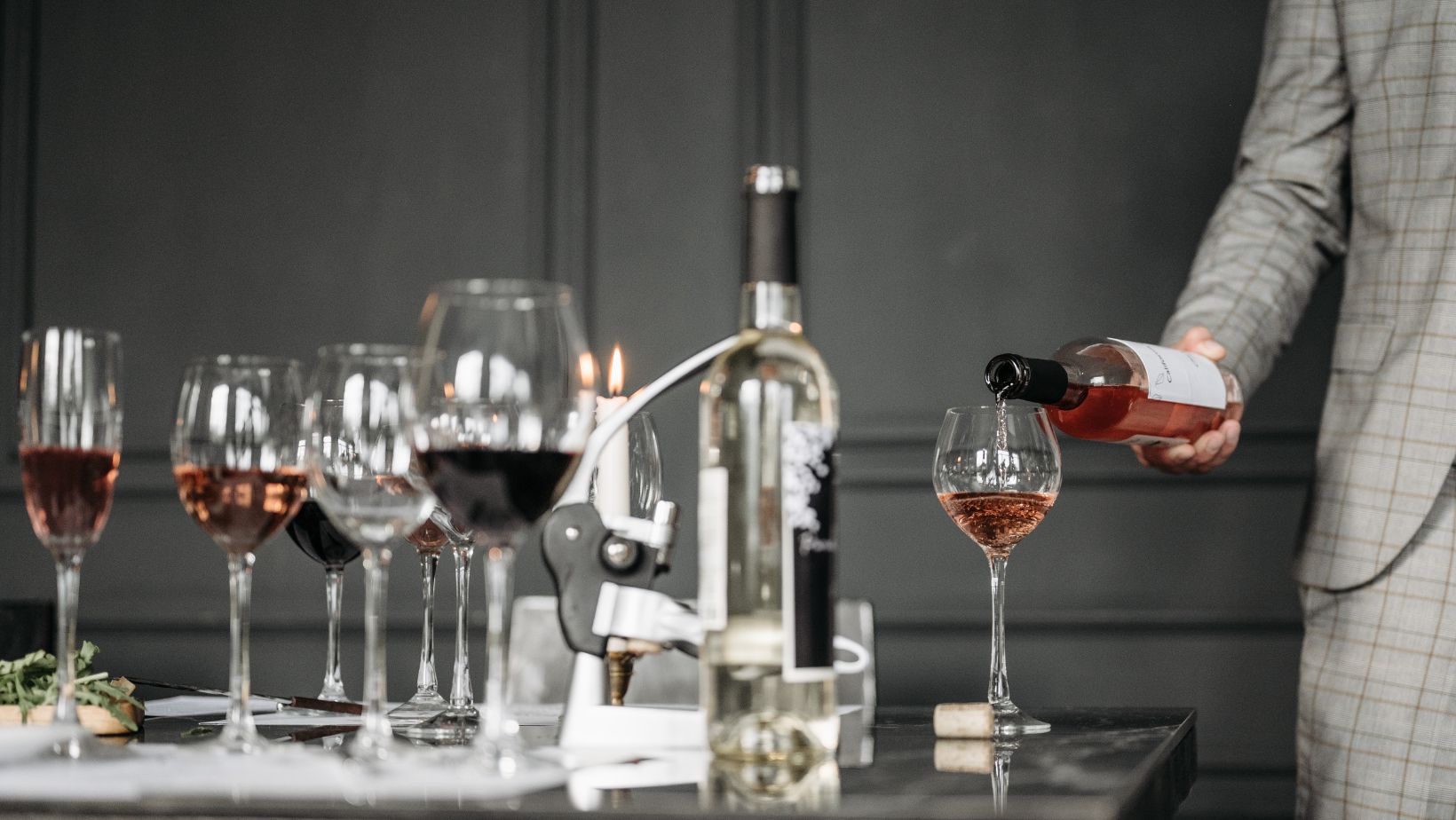
In this way, the wine flows more smoothly toward the opening, making the act of pouring much more precise and controlled, one of the basic principles of wine etiquette. This shape allows the wine to pour slowly into the glass, avoiding overly abrupt or “violent” pours. Careful and measured serving helps preserve aromas and structure, enhancing the wine to its fullest while also contributing to a more elegant and refined experience.
3. Facilitate the decanting of aged red wines
The long, narrow neck of wine bottles plays a particularly important role, especially for aged red wines. As mentioned, this shape allows the wine to be poured slowly, precisely, and in a controlled manner. This helps separate the liquid from the sediments that, over time, settle at the bottom of the bottle in this type of wine.
Thanks to this gradual pouring, it is possible to prevent the sediments from being disturbed and ending up in the glass, which would compromise the enjoyment of the tasting. The result is a cleaner, more harmonious wine that is pleasing both visually and on the palate.
By contrast, beverages such as water, juices, or soft drinks do not contain sediments and do not require special care during serving. For this reason, their bottles are generally designed with shorter, wider necks, prioritizing practicality over precision in pouring.
4. Allow the cork to fit better against the walls
Cork, traditionally the main material used to seal wine bottles, is slightly elastic. When inserted into the neck of the bottle, it gently expands to fit the shape of the glass, creating a perfect seal.
The long, narrow neck of the bottle is ideal for this purpose: it allows the cork to adhere evenly to the entire inner surface of the glass, ensuring a tight and secure closure, and consequently, better wine preservation.
5. Handle them more safely
Another often-cited reason for the long, narrow shape of wine bottles relates to ease of transport and handling. The neck, being the thinnest part of the bottle, is also the easiest to grip with your hand.
This feature makes it simpler to lift, hold and carry the bottle, reducing the risk of slips or accidents. The long, narrow neck functions like a “natural handle,” allowing the bottle to be handled with greater safety and control.

6. Stand out from other bottles
The practical reasons we’ve just discussed are, without a doubt, the main reasons why wine bottles have a long, narrow neck. However, it is very likely that there is also an additional explanation, related to the product’s identity and recognizability.
From the very beginning, producers have sought to distinguish wine from other beverages, including through the shape of the bottle. The long, narrow neck, in addition to providing tangible benefits in terms of preservation and serving, has over time become a distinctive feature, immediately recognizable and aesthetically elegant.
The combination of functionality and aesthetics has thus helped establish this shape, turning it into the standard.
If you liked our article and if you want to continue to receive news, updates and curiosities about the world of wine, subscribe to the Wineshop.it wine newsletter. Lots of content and offers await you.


 Loading...