





How to properly hold a wine glass by the stem
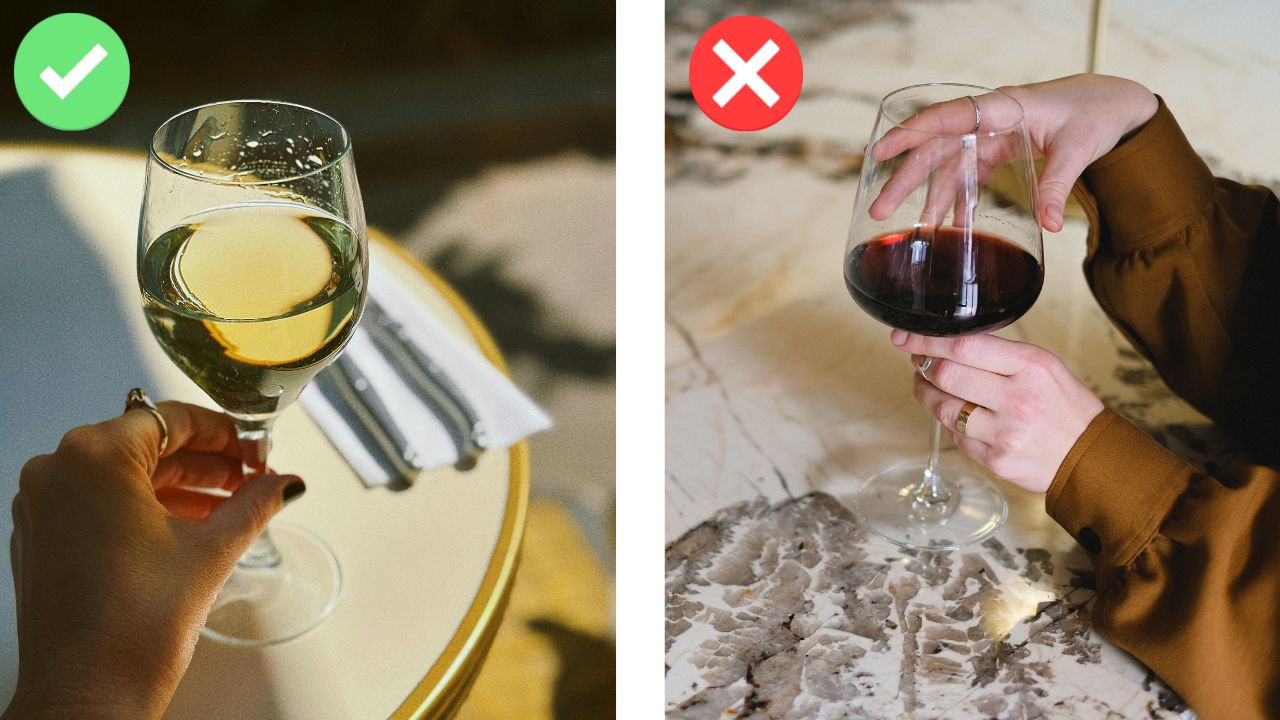
They’ve always told you that a wine glass should be held by the stem and not by the bowl. That’s true, and it’s one of the first rules of wine etiquette we are taught. But have you ever thought about how to correctly hold the glass by the stem? In other words, how should a wine glass be properly gripped by the stem? Should you hold it with your whole hand, or are just a few fingers enough? Are there valid alternatives in certain situations?
We’ll tell you right away: it’s not enough to just grab the stem in a generic way. There’s a precise technique, made up of a few simple but essential rules that you absolutely need to know.
In this article, we want to go into detail, explaining clearly, practically, and definitively how to hold a wine glass by the stem without mistakes and with elegance.
Why it’s important to hold a wine glass by the stem

Before getting into the details, it’s worth emphasizing that holding a wine glass by the stem is not just a matter of style and elegance, it also has important practical functions that allow you to enjoy wine at its best.
Specifically, holding the glass correctly by the stem is essential for three main reasons:
It protects the wine’s temperature
Holding the wine glass by the stem helps preserve the wine’s ideal temperature, preventing it from being warmed by the heat of your hands. On the other hand, gripping the bowl transfers heat directly to the wine, altering its aroma and flavor. This precaution is especially important for white wines, rosé wines and sparkling wines, which need to remain chilled in order to fully express their organoleptic qualities.
It keeps the bowl clean
Holding the bowl with your hand can leave fingerprints on the glass, spoiling the elegance of the wine glass and affecting the tasting experience, especially during the visual examination of the wine. By holding the glass by the stem instead, the bowl remains elegant and spotless, allowing you to fully appreciate the wine’s colors and nuances.
It allows for more natural and elegant movements
When held by the stem, the glass can be easily swirled and tilted without the risk of spilling the wine. This grip also makes every gesture more harmonious and immediately conveys a sense of refinement and elegance.
How to correctly hold a wine glass by the stem
Now let’s take a look at how to actually hold a wine glass by the stem. It’s not enough to grab it randomly, there is a specific technique, an elegant and functional grip that, once learned, becomes second nature.
The key points are three:
1. Index and middle fingers on one side, thumb on the other
The glass should be held with the index and middle fingers on one side of the stem and the thumb on the opposite side.
2. Relaxed hand
It’s best to keep your hand relaxed. Don’t grip the stem too tightly, let the glass appear almost suspended between your fingers.
3. Palm away from the bowl
Keep the palm of your hand away from the bowl, parallel to the stem, avoiding contact with the upper part of the glass so as not to transfer heat or leave unwanted fingerprints.
This is universally considered the best grip: it ensures stability, prevents altering the wine’s temperature and gives naturalness and elegance to your movements. For this reason, it is the ideal choice not only for professional tastings or formal occasions but also for more casual and convivial moments.
How to hold a wine glass: alternative solutions
While this remains the best and recommended method, it’s worth noting that there are also two possible alternatives:
1. Grip with the middle finger at the base
Another possible way to hold the glass involves using the middle finger to support the base of the bowl, while the index finger on one side and the thumb on the other grasp the lower part of the stem. This is a very stable yet elegant grip that keeps the hand well away from the bowl of the glass. This allows you to swirl the wine easily without the risk of spilling it, and most importantly, without heat or fingerprints affecting the visual and tasting experience.
This grip is more complex, but it is often used in professional tastings.
2. Four-finger grip
The four-finger grip involves adding the ring finger to the three fingers of the classic hold. This small extra support can provide additional stability and security, making it particularly useful for beginners or anyone who doesn’t yet feel completely comfortable with the traditional grip.
Note: As you may have noticed, we haven’t mentioned the pinky finger because it should not be involved in the grip. It doesn’t provide any real contribution to the stability of the glass: the thumb, index and middle fingers are sufficient, with the ring finger added for support if needed. Including the pinky only stiffens the hand, makes the grip less natural and elegant and complicates the movements of the glass.
The pinky should be kept relaxed, naturally following the position of the hand, more or less parallel to the other fingers, but without touching the stem or protruding in an overly noticeable way.
If you liked our article and if you want to continue to receive news, updates and curiosities about the world of wine, subscribe to the Wineshop.it wine newsletter. Lots of content and offers await you!


 Loading...