
Sparkling Wine: How to Pour It Without Creating Too Much Foam
How many times have you seen a glass overflowing with foam while pouring sparkling wine? Surely more than once, because it’s a very common mistake! Excessive foam formation is indeed the main risk when pouring sparkling wine.
Fortunately, with a few simple tips and the correct technique, it’s possible to avoid excessive foam, preserving both the wine’s sensory characteristics and the elegance of the service.
In this practical guide, you’ll find clear and effective advice for serving sparkling wine the right way, preventing foam from taking over. By following these suggestions, you’ll be able to pour sparkling wine with confidence, elegance and style.

Pouring Sparkling Wine Without Creating Too Much Foam: Here’s How
Below, we reveal the correct technique for pouring sparkling wine without generating too much foam, guiding you step by step through every stage of the pour.
But first, we’ll briefly explain why it’s important not to create excessive foam when pouring sparkling wine, so you’ll have a complete and clear understanding of the situation.
Why You Shouldn’t Create Too Much Foam When Pouring Sparkling Wine
Creating too much foam while pouring doesn’t just affect the presentation of the service, it also limits the sparkling wine’s ability to fully express its qualities. In particular, it’s important to avoid excessive foam formation when pouring sparkling wines because:
It Can Cause the Wine to Overflow from the Glass
Abundant and excessive foam can easily make the wine overflow from the glass, leading to unpleasant situations. For example, you risk staining tablecloths, clothing or surrounding surfaces. Such a situation compromises the elegance of the service and can give guests the impression of a lack of care and attention in serving.
It Can Compromise the Formation of the Perlage
When too much foam is generated during pouring, the carbon dioxide in the sparkling wine disperses too quickly. This reduces the number of fine and persistent bubbles, known as the perlage, which is one of the distinctive features of a quality sparkling wine. Perlage is not only aesthetically valuable but also contributes to the sensation of freshness in the mouth. If the foam is excessive, the bubbles burst too quickly and the wine loses part of its liveliness.
It Can Compromise the Perception of Aromas
Bubbles also play a fundamental role in the perception of a sparkling wine’s aromas. As they rise in the glass, the bubbles carry the wine’s aromatic molecules and release them gradually, allowing the nose to perceive the scents. If the foam is excessive, a large part of the aromatic molecules disperses too quickly into the air, preventing a full appreciation of the wine’s olfactory complexity.
How to Pour Sparkling Wine into the Glass Without Excess Foam: A Practical Guide
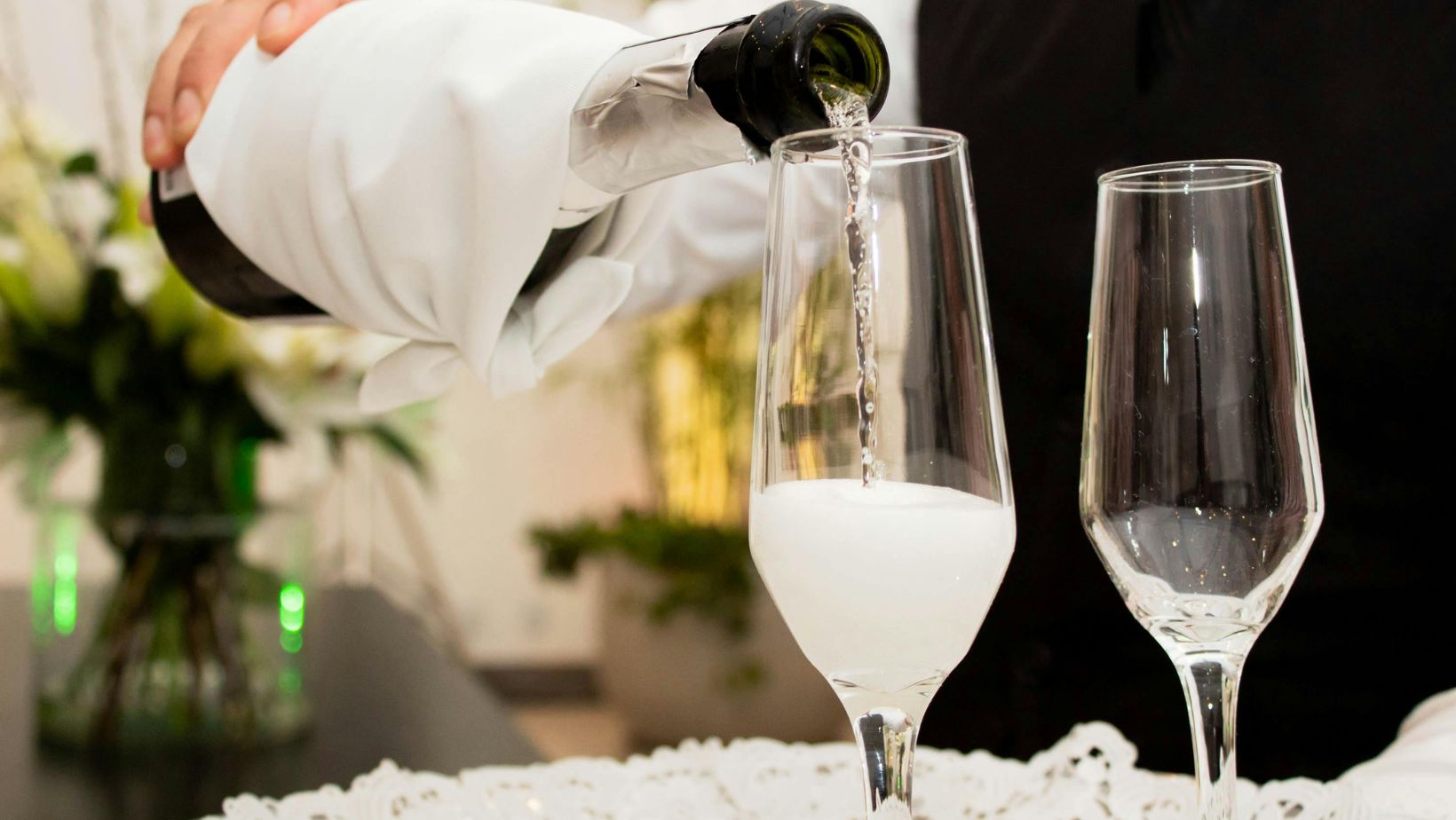
The technique for pouring sparkling wine into the glass is essential to avoid excessive foam formation, thereby preserving the wine’s characteristics and ensuring a complete tasting experience. Below, we show you step by step all the actions to follow to serve sparkling wine correctly, without creating too much foam.
Tilt the Glass at About 45 Degrees
The first essential step before pouring sparkling wine into the glass is to tilt the glass at approximately 45 degrees. This position prevents the wine from falling directly onto the bottom of the glass.
If the wine were poured straight onto the bottom, the carbon dioxide in the sparkling wine would be released too quickly and in a disorderly manner. The violent impact causes the bubbles to break immediately, preventing them from rising slowly as they normally would. The result is excessive foam, which can make the glass overflow, reduce the persistence of the perlage and disperse the more delicate aromas, compromising both the visual elegance and the overall sensory quality of the wine.
Don’t Tilt the Bottle Too Much
Keeping the bottle at a moderate angle allows you to pour the wine slowly and accurately, preventing the flow from becoming too fast. Tilting the bottle too much can create excessive foam, break the bubbles and compromise the perlage, reducing both the elegance and the quality of the tasting experience.
Pour Along the Inside Wall of the Glass
Tilting the glass at 45 degrees allows you to pour the wine along the inside wall of the glass, rather than directly into the center. Pouring the wine along the inner wall helps soften the impact with the surface, making the pour more gentle and controlled. This prevents the bubbles from breaking too quickly and drastically reduces the formation of excess foam.
Pour Slowly
Pour slowly along the inner wall of the glass, avoiding pouring from above directly into the center. Use a steady and controlled flow with smooth, regular movements to allow the wine to gently slide into the glass. This way, you avoid rapid or abrupt pouring, which, as we’ve seen, can create excessive foam.
Don’t Overfill the Glass
Fill the glass only halfway, or at most up to two-thirds of its capacity. Leaving free space is essential: it allows the sparkling wine to develop its bubbles slowly. If the glass is overfilled, the wine doesn’t have enough room to expand. The carbon dioxide in the bubbles is released quickly, creating pressure that promotes the formation of excess foam.

Extra Tips for Pouring Sparkling Wine Without Creating Foam
Here are some practical tips to store and pour sparkling wine correctly, avoiding common mistakes and unexpected situations such as excessive foam formation.
Store and Serve the Wine at the Right Temperature
Warm sparkling wine tends to be foamier than wine served at the correct temperature. When the wine is stored above the ideal temperature, bubbles form more quickly because the dissolved carbon dioxide is released more easily. This leads to abundant foam that is harder to control. The ideal storage temperature is 10–12°C, while the serving temperature is generally around 8°C.
Never Shake the Sparkling Wine Bottle
Never shake the sparkling wine bottle before pouring, as agitating the wine causes a rapid and uncontrolled release of carbon dioxide, resulting in excessive foam formation.
Use the Right Glass
The flute is the traditional glass used for serving sparkling wine. Its narrow surface and elongated shape allow it to accommodate the initial foam without risk of overflow and promote the slow, orderly rise of the bubbles. Other glasses with a wider mouth and base disperse bubbles more quickly, causing more foam formation because the carbon dioxide is released rapidly and uncontrollably.
Now you know all the tricks to pour sparkling wine without creating excessive foam. Put them into practice!
If you liked our article and if you want to continue to receive news, updates and curiosities about the world of wine, subscribe to the Wineshop.it wine newsletter. Lots of content and offers await you.


 Loading...