


Why can wine have a chocolate aroma?
This article was inspired by a wine tasting with some friends who were just getting into wine. They were surprised when we said we detected a hint of chocolate in this Amarone della Valpolicella.
They looked at us with a puzzled expression, as if to say, “How is that even possible?!”
Well, it is. And that gave us the perfect opportunity to explain on our Wine Blog why some wines can have chocolate aromas.

How do we perceive wine aromas?
Before getting to the heart of our article and answering the key question, it is worth taking a moment to explain how we perceive the aromas in wine.
Naturally, there is no chocolate, fruit, spices, etc. in the wine. When tasting a wine, we can perceive aromas that remind us of them.
When we smell a wine, some of its volatile compounds reach the olfactory receptors in our nose. These receptors send signals to the brain, which processes them and compares them with information already stored in our olfactory memory.
It is thanks to this process that we describe an aroma by associating it with chocolate, fruit, spices, etc., even though the substance we associate it with is not actually present in the glass.
Our brain, in fact, is not telling us that there is chocolate in the wine. It is recognizing aromatic sensations that remind us of those we associate with chocolate.
Why do some wines have chocolate aromas?
At this point, we can better understand the question we started with and provide a clearer answer.
There is no chocolate in the wine. What’s more, there is no single compound responsible for the aroma of chocolate. Rather, it is the result of the interaction between several aromatic compounds that our olfactory system recognizes and interprets based on experiences already stored in our memory.
That is why, during a tasting, we may describe a wine as having a chocolate aroma.
Which compounds create chocolate aromas in wine?
If there is no single “chocolate molecule” in wine, then which compounds are responsible for creating this particular aroma?
The perception of chocolate is complex and results from the interaction of several different compounds and families of aromatic compounds.
Some of the best-known compounds that can contribute to this type of aromatic profile include:
• Pyrazines
• Furans and furanic aldehydes
• Vanillin
• Guaiacol
There are also many other compounds that can contribute to the overall aromatic profile of a wine, and together they can create the combination of aromas we perceive as chocolate.
The key point is that none of these compounds, on its own, can be considered “the chocolate molecule” in wine. What we perceive in the glass depends on their combination, their concentration, and the wine’s overall composition.
The same compound can contribute to very different aromas depending on the context in which it occurs. In fact, some of these compounds are also associated with aromas that have little or nothing to do with chocolate. Their aromatic expression can change depending on how they interact with the other compounds present in the wine.
In other words, a chocolate aroma is not the result of one specific molecule, but of the way different compounds come together and are interpreted by our sense of smell.
Where and when do chocolate aromas develop in wine?
We’ve seen that chocolate aromas in wine are not caused by a single molecule, but by the interaction of several aromatic compounds. But where and when do these compounds actually develop?
The answer is: at different stages of the winemaking process and throughout the wine’s evolution.
Some aromatic compounds are already present in the grapes, in amounts and combinations that depend on the grape variety, its level of ripeness, and the conditions in which the grapes are grown.
Others develop during alcoholic fermentation and maceration.
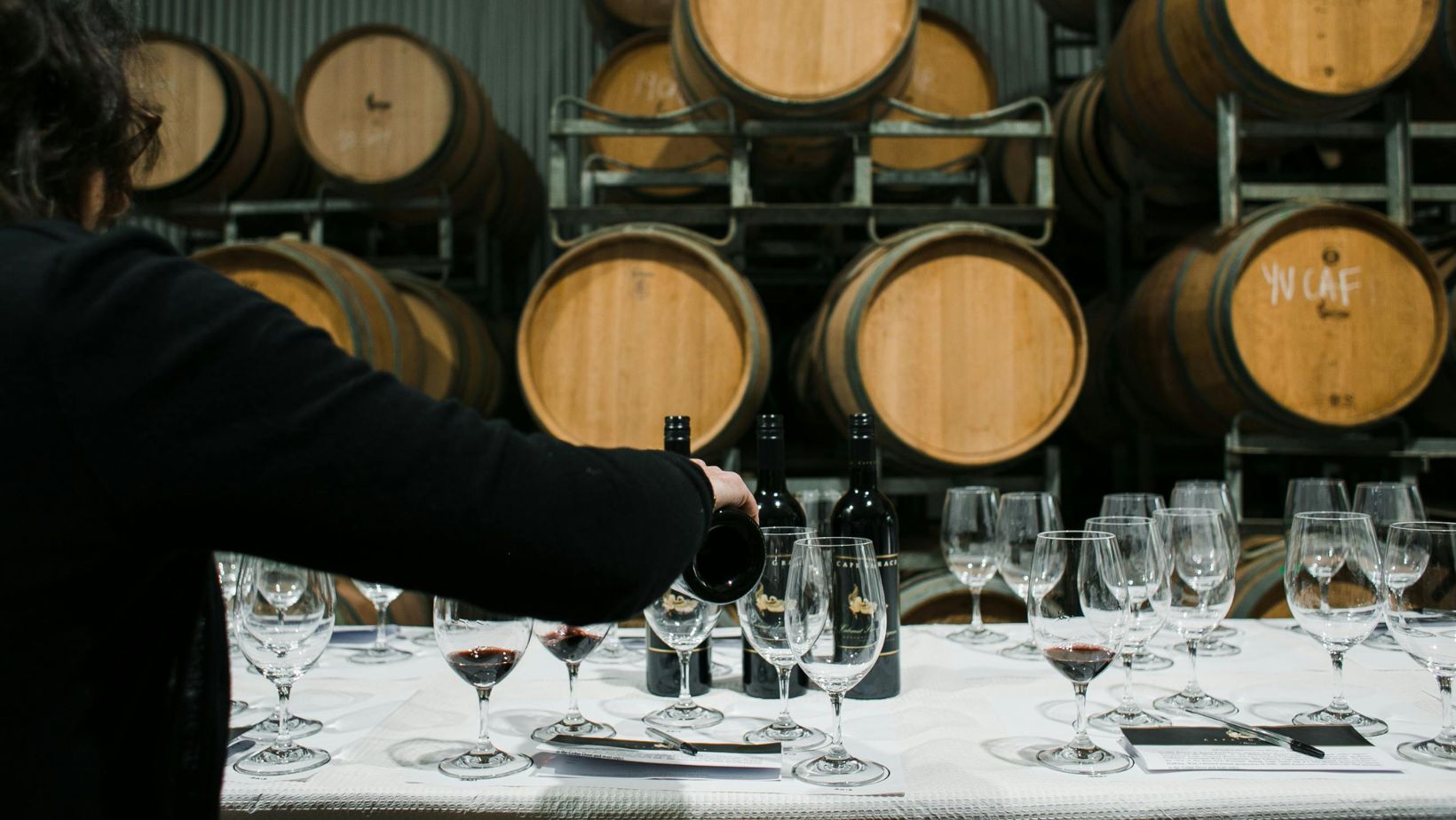
Still others can emerge during aging, particularly when the wine is matured in oak.
This stage is especially interesting because the wine comes into contact with the wood and can take on a wide range of aromatic compounds. The toasting of the barrels promotes the formation of compounds that, together with those already present in the wine, can contribute to the perception of chocolate aromas.
Does the chocolate aroma in wine come from oak aging?
Not necessarily.
Aging wine in oak encourages the development of various aromatic compounds, some of which can contribute to notes of cocoa, chocolate, and other aromas. In fact, many wines with chocolate-like aromas have been aged in oak.
However, oak aging is not essential for these aromas to develop.
As we’ve seen, the compounds responsible for a wine’s aromas can originate at different stages of the winemaking process and during the wine’s evolution. Their presence cannot therefore be attributed solely to oak aging.
So, when we describe a wine as having chocolate notes, this may suggest that it has spent some time in oak, but it is not conclusive evidence. Chocolate aromas can result from a combination of different factors and, in some wines, can develop even without any contact with oak.
Which wines have chocolate aromas?
While there are no grape varieties that can be automatically associated with chocolate aromas, and this characteristic is certainly not present in every wine made from a particular variety, we can say that some grape varieties are more likely to develop this type of aromatic profile.
Some of the best-known include:
• Syrah
• Merlot
• Corvina
As you can see, these are predominantly red grape varieties used to make red wines. Many of these wines undergo extended skin maceration and are often aged for long periods, processes that can contribute to the development of chocolate aromas.
This does not mean, however, that white wines are excluded. White wines can also, although much less frequently, develop aromas reminiscent of chocolate, particularly when they have good structure and undergo extended aging in oak.
If you liked our article and if you want to continue to receive news, updates and curiosities about the world of wine, subscribe to the Wineshop.it wine newsletter. Lots of content and offers await you!


 Loading...