



Why do water and ice chill wine faster than ice alone? The scientific explanation
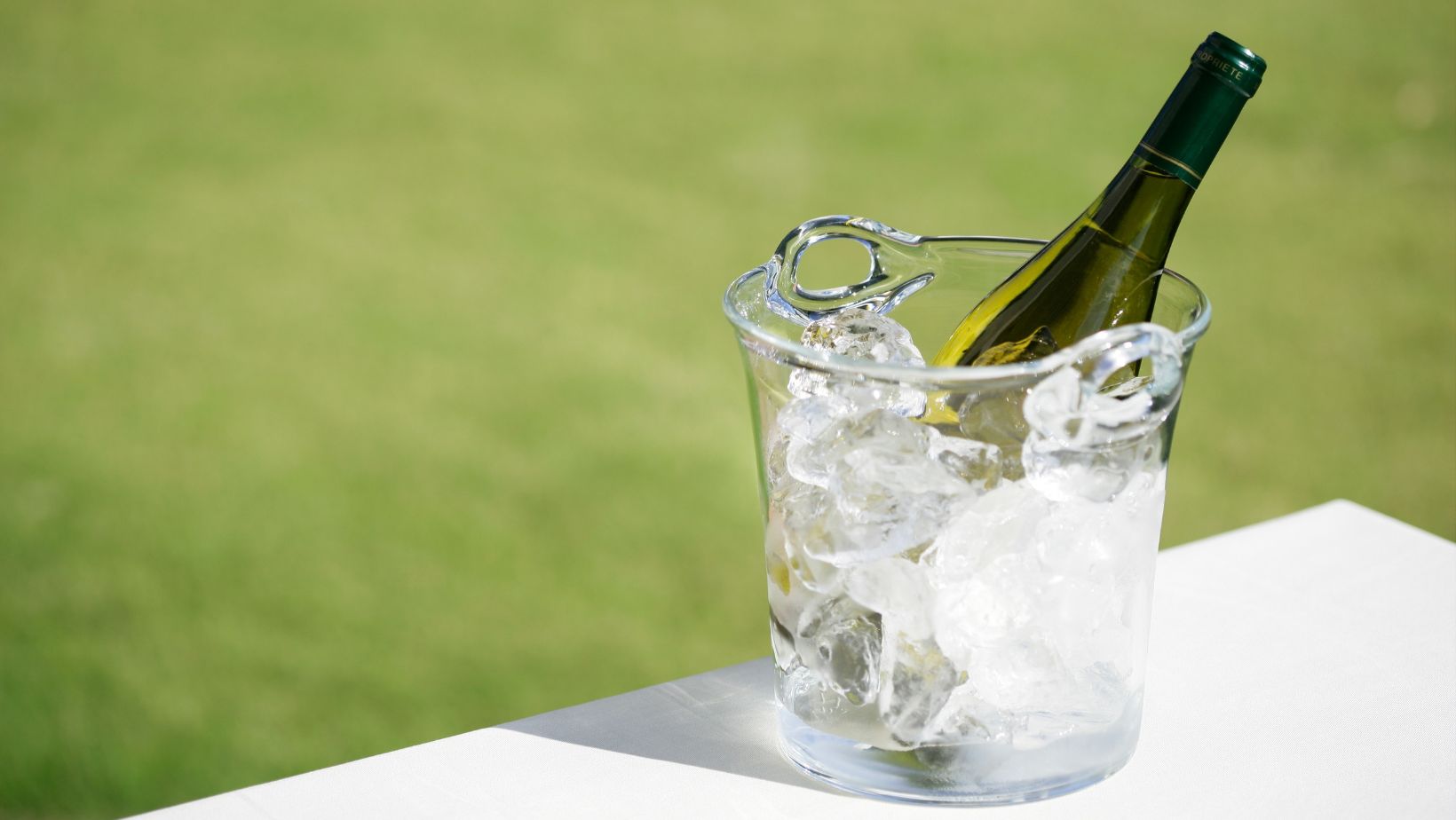
To chill a bottle of wine and bring it to the ideal serving temperature, place it in an ice bucket filled with ice and water, rather than using just the traditional ice cubes. Combining these two elements speeds up the cooling process, making it much more effective than using ice alone.
Did you know?
You may already know this, but either way, we want to explain why. Behind this simple tip lies an interesting scientific explanation. Keep reading to find out more.
Why do water and ice chill wine faster?
When we want to chill a bottle of wine quickly, the first thing that comes to mind is placing it in a traditional ice bucket filled with plenty of ice cubes. You might also think that the more ice cubes you add, the faster the bottle and the wine will cool down. It seems logical.
However, there is an even more effective method: filling the bucket with a mixture of water and ice. Combining these two elements is the best way to chill a bottle of wine quickly, bringing it to the ideal wine serving temperature in a short amount of time.
After making such a claim, it is natural to ask why: why does a mixture of water and ice chill wine faster than ice alone?
Science provides the answer. In fact, it explains exactly why this method is so effective. To understand this, we need to revisit a few scientific concepts relating to water and ice.
Let's take it one step at a time.

Why do water and ice chill wine faster? The role of water
Let's start by looking at the role played by the first key element: water.
To understand this, we need to introduce a couple of fundamental scientific concepts.
The first is that, to cool a bottle, we need to "remove" heat from the wine and transfer it through the glass to the surrounding environment. The more efficiently this heat exchange takes place, the faster the wine's temperature drops.
The second is that water is a better conductor of heat than air.
Now, imagine two ice buckets: one filled with ice alone and the other with a mixture of water and ice.
The ice-only bucket has a couple of significant drawbacks. First, air trapped between the ice cubes does not transfer heat efficiently, or at least does so very slowly. Second, the ice cannot cover or come into contact with a large enough surface area of the bottle. In fact, in a bucket filled with ice cubes alone, the glass comes into direct contact with the ice at only a few points. Air-filled gaps remain between the cubes, slowing down heat transfer.
By contrast, a bucket containing both water and ice offers not only a better heat transfer medium but also a substance that can come into contact with a much larger surface area of the bottle.
Because water is a liquid rather than a solid like ice, it can fill the gaps between the cubes and reach every part of the bottle, surrounding it completely. This creates the ideal conditions for heat to flow more quickly from the wine to the surrounding environment, allowing the bottle to cool faster.
Why do water and ice chill wine faster? The role of ice
Let's now turn to the second element: ice, whose contribution remains essential.
While cold water helps facilitate heat transfer, ice absorbs heat as it melts. The key point is that, during the phase change from solid to liquid, ice does not increase the temperature of the water or the surrounding mixture until it has completely melted.
Essentially, the heat transferred from the bottle helps melt the ice but does not warm the water. This allows the water and ice mixture in the bucket to remain cold for quite some time while continuing to draw heat away from the bottle.
Considering everything we have discussed so far, we can conclude that a mixture of water and ice is the most effective and efficient way to chill a bottle of wine, because these two elements perform complementary functions: water facilitates heat transfer from the bottle to the mixture. Ice absorbs this heat and, as it melts, keeps the mixture's temperature low. Water also fills the gaps between the ice cubes, allowing it to cool a much larger portion of the bottle's surface. Together, these two elements create the ideal conditions for chilling a bottle of wine quickly and efficiently.
If you liked our article and if you want to continue to receive news, updates and curiosities about the world of wine, subscribe to the Wineshop.it wine newsletter. Lots of content and offers await you!


 Loading...