




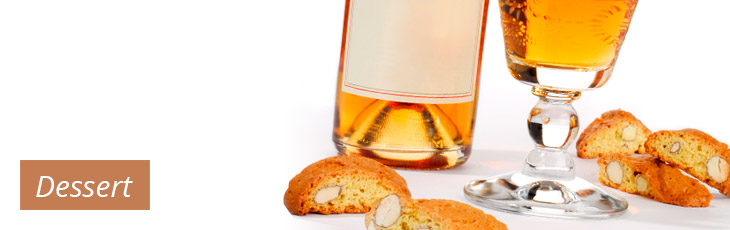
Does dessert wine have to be served only with dessert?
When we think of dessert wines, we naturally think of them as being ideally suited to the end of a meal, alongside dessert. The name itself suggests it. And there’s nothing wrong with that!
Anyone who reads our wine blog knows that, as we have pointed out several times, a dessert should be paired with a sweet wine that has at least the same level of sweetness.
But dessert is not the only possible pairing. To answer the question in the title right away: no, dessert wine is not meant to be enjoyed only with dessert.
A sweet wine is not made exclusively to be enjoyed with sweet dishes. Many sweet wines can be a perfect match for foods beyond dessert.
So, let’s take a look at why a dessert wine can also be paired with a savory dish and, finally, which pairings are perfect for a sweet wine beyond the classic dessert.

Why can a dessert wine also be paired with a savory dish?
Categorizing a wine as a “dessert wine” is useful mainly because it highlights one of its distinctive characteristics: sweetness, which naturally pairs with desserts.
But this does not mean that a sweet wine can only be paired with something sweet. Dessert wines can have different levels of sweetness and, at the same time, very different characteristics in terms of body, acidity, freshness, alcohol content, etc., making other pairings possible as well.
The sweetness of a wine can also work very well by contrast with certain characteristics of savory dishes. In this case, the aim is not to create a similarity between wine and food, but rather a balance between different and often opposite sensations. This is the principle behind "contrast pairing", which is widely used in food and wine pairings.
The idea is to combine two or more different taste sensations in order to achieve balance and a pleasant harmony on the palate. The sweetness of dessert wines can prove surprisingly effective when paired with dishes or foods characterized by pronounced:
• saltiness
• spiciness
• richness
The contrast between the sweetness of the wine and these characteristics of the food can create a truly pleasant balance of flavors.

Sweet Wine: what are the best pairings with savory dishes?
Here are some of the most interesting pairings to try.
Sweet Wine and Blue and/or Aged Cheeses
One of the best pairings is the combination of sweet wine with strong-flavored, blue and/or aged cheeses.
These cheeses, such as Gorgonzola, have pronounced salinity, body and aromatic intensity, often accompanied by a spicy note and a certain degree of richness.
The sweetness of the wine softens both the perception of the cheese's salinity and its pungent notes. At the same time, the cheese's salinity and intensity prevent the wine from tasting overly sweet. The two sensations, sweetness and salinity, come together to create a pleasant balance.
When pairing sweet wine with rich, full-bodied cheeses, it is preferable to choose a wine that also has good freshness, which can lighten the perception of richness and cleanse the palate. Among the various options, Recioto della Valpolicella and Passito di Pantelleria can offer particularly successful pairings with blue and aged cheeses.
Sweet Wine and Spicy Dishes
Another excellent pairing for sweet wine is with spiced dishes.
The sugar content of the wine helps soften the intensity of the heat, creating a pleasant contrast on the palate. As a general rule, the spicier the dish, the greater the sweetness of the wine can be to balance it.
However, not all sweet wines are suitable for pairing with spicy dishes. While structured and full-bodied sweet wines can work well with blue cheeses, when it comes to spicy cuisine, it is preferable not to overdo it with either body or, above all, alcohol content. Too much alcohol can intensify the sensation of heat caused by spicy food, resulting in an unbalanced pairing.
With these dishes, we recommend sweet wines with moderate alcohol levels and an aromatic intensity that can stand up to the character of the food.
This principle can be applied to many dishes from Chinese, Thai, Indian and Mexican cuisine, which are known for their use of spices. Among the wines worth considering in such cases is this sweet version of Gewürztraminer.
Sweet Wine on Its Own
To conclude, we have one more suggestion: the most complex and rich sweet wines can be perfect "meditation wines", meaning they can also be enjoyed on their own, without any food accompaniment.
A glass of Vinsanto or Sciacchetrà can be enjoyed after a meal, allowing you to fully appreciate its many nuances.
In short, dessert wine can be enjoyed with dessert, but that's not all. Blue cheeses and spicy dishes are other excellent options, as is simply enjoying a glass on its own, without any food.
If you liked our article and if you want to continue to receive news, updates and curiosities about the world of wine, subscribe to the Wineshop.it wine newsletter. Lots of content and offers await you!


 Loading...