
Which grapes are harvested first?
There are grape varieties that are harvested earlier than others year after year. Just compare reports from different harvest seasons and you’ll notice that the varieties identified as the first to be picked are, for the most part, always the same. In other words, some varieties tend to open the harvest season almost regularly.
But which grapes, specifically, are harvested first? And why are they picked before the others?
Take a few minutes to read our article: we’ll answer these questions. We’ll look at the varieties that traditionally get the harvest underway and explain why they are the ones picked first.

Which wine grape varieties are harvested first?
Let’s get straight to the heart of the matter by looking at the varieties that most frequently mark the beginning of the grape harvest season.
In most vintages, the first wine grapes to be harvested belong to a specific group of varieties. These include, above all:
• Chardonnay
• Pinot Blanc
• Pinot Noir
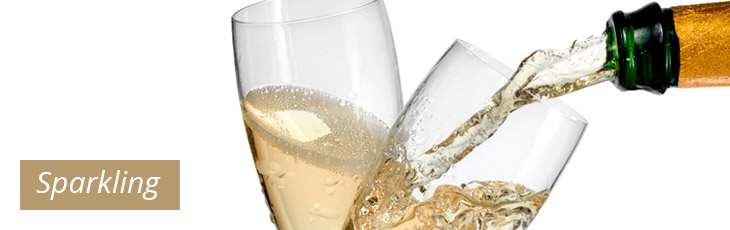
One aspect we should point out right away is that these grapes are used to produce a great many sparkling wines. In every wine-growing region around the world and in every vintage, the first grapes to be harvested are precisely those intended for the production of sparkling wines. Chardonnay, Pinot Blanc, and Pinot Noir are the classic grape varieties used for many sparkling wines.
At this point, an obvious question arises: why do winemakers choose to harvest the grapes intended for sparkling wine production first?
Why are grapes for sparkling wine production harvested first?
Let’s follow the reasoning to understand why, in many cases, grapes intended for sparkling wine are harvested before those destined for other types of wine.
The answer lies in the characteristics sought in the sparkling wine base, the wine that will subsequently undergo a second fermentation and be transformed into the sparkling wine itself.
To obtain a good sparkling wine base, two characteristics are particularly important:
• high acidity: essential for the freshness of the sparkling wine;
• moderate sugar content: a lower concentration of sugars makes it possible to obtain a base wine with a moderate alcohol content, leaving room for the subsequent secondary fermentation, during which further fermentation takes place. Therefore, grapes with a low sugar content help keep the alcohol level under control. Remember that during fermentation sugars are converted into alcohol!
It is precisely the pursuit of these characteristics that leads winemakers to harvest varieties intended for sparkling wine production, such as Chardonnay, Pinot Noir, and Pinot Blanc, during the early stages of the harvest. By bringing the harvest forward, it is possible to preserve higher levels of acidity and limit sugar accumulation, thereby obtaining grapes suitable for producing a fresh, well-balanced base wine with a moderate alcohol content, just as a sparkling wine should be!

Why are grapes for sparkling wine harvested earlier?
Grapes intended for sparkling wine production are not only harvested first, that is, before other varieties, but also earlier, before they have reached physiological maturity. We can therefore say that they undergo a slightly early harvest.
To fully understand the reason behind this practice, it is useful to introduce two key concepts: physiological maturity and technological maturity.
• Physiological maturity
This is the moment when the grapes have completed their natural and biological ripening process, reaching a balance among their various components.
• Technological maturity
This refers primarily to the balance between sugars and acids present in the grapes. As ripening progresses, the concentration of sugars increases, while acidity tends to decrease. Technological maturity is reached when this balance is best suited to the characteristics of the wine one wants to produce.
Physiological maturity and technological maturity do not necessarily coincide. Some winemakers choose to harvest when the two types of maturity coincide, that is, when the grapes are in perfect balance. Others, however, do not, because they want to produce a wine with specific characteristics. In the case of grapes intended for sparkling wine, the two forms of maturity do not coincide.
This is the key point: as ripening progresses, the grapes accumulate sugars, while acidity tends to decrease. As the grapes approach physiological maturity, the ratio between these two components therefore becomes increasingly balanced. For sparkling wine bases, however, it is preferable to bring the harvest forward slightly, in order to pick grapes with higher acidity and a still-moderate sugar content which, as we have seen, are essential characteristics for sparkling wine production.
Are Chardonnay, Pinot Noir, and Pinot Blanc always the first grapes to be harvested?
In many cases, these varieties are among the first to be harvested, but not because they are necessarily the earliest-ripening varieties overall. The main reason is that Chardonnay, Pinot Noir, and Pinot Blanc are used to produce many sparkling wines and, when they are destined for this purpose, they are harvested early.
However, this does not mean that they are always the first grapes to be harvested. The timing of the harvest depends on the type of wine being produced.
Sparkling wines, in fact, can also be made from many other grape varieties. In these cases, the varieties intended for sparkling wine production are harvested first, regardless of the grape variety.
Likewise, Chardonnay, Pinot Noir, and Pinot Blanc can also be used to produce still wines. When destined for these wines, their harvest is postponed compared with when they are used for sparkling wine production, sometimes until they reach full physiological maturity, depending on the characteristics the winemaker wants to achieve.
The point we would like to emphasize is this: some grape varieties naturally ripen earlier than others. But the fact that a grape is harvested early, and before other varieties, depends above all on the type of wine one wants to produce.
If you liked our article and if you want to continue to receive news, updates and curiosities about the world of wine, subscribe to the Wineshop.it wine newsletter. Lots of content and offers await you!


 Loading...