
Why do wine bottles have shoulders?
Have you ever looked at a wine bottle and noticed that some have more pronounced shoulders, while others have a smoother, more rounded shape? Have you ever wondered what purpose they serve and why some bottles have more defined shoulders than others?
If you have made it this far, you are probably curious to discover the story behind this often-overlooked detail. In this article, we will explain what the shoulders of wine bottles are used for and why some bottles have more pronounced shoulders than others.
What are the shoulders of a wine bottle?
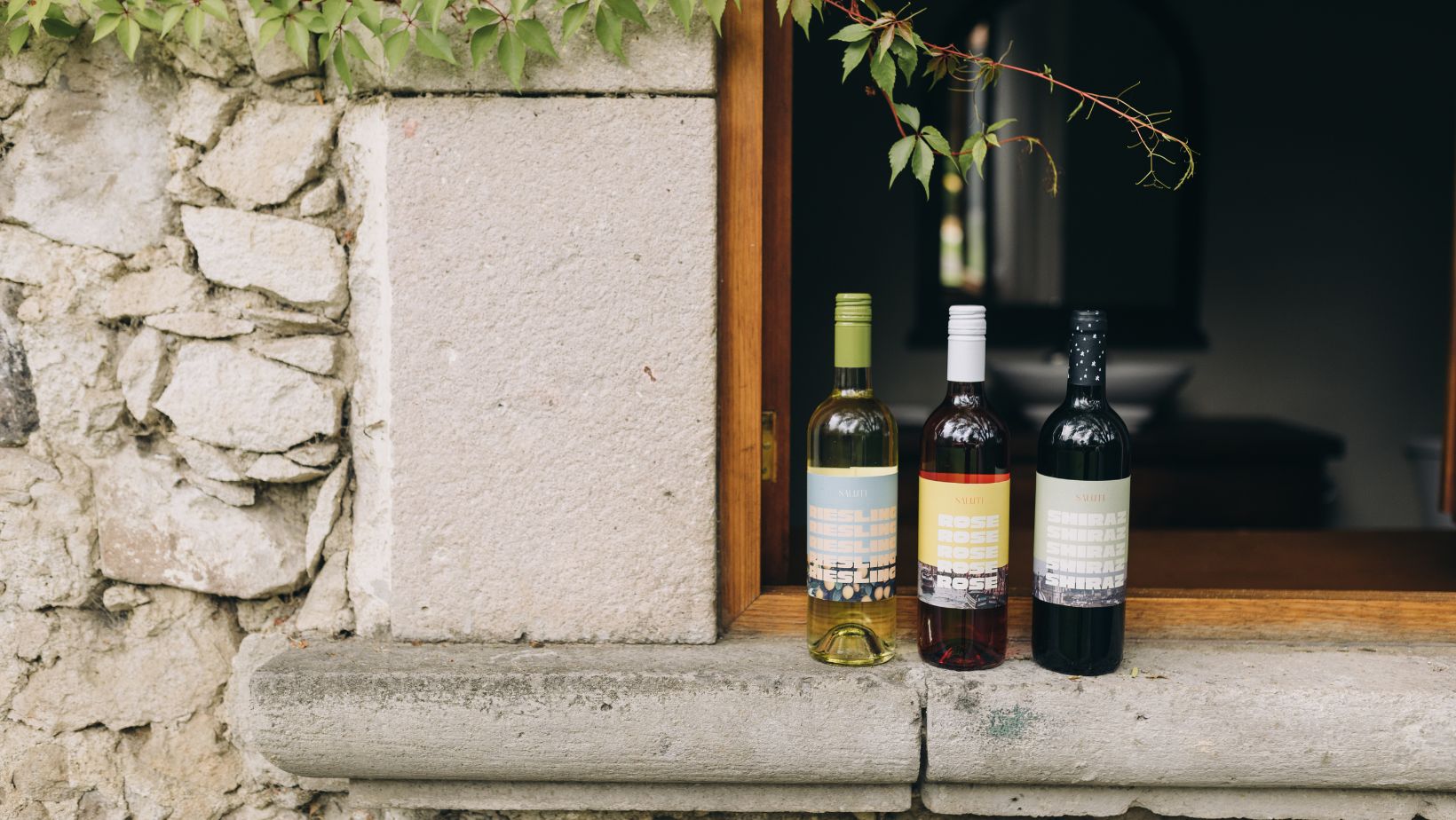
The shoulders of a wine bottle are the transition area between the body and the neck of the container. This is the section where the bottle narrows, with a more or less pronounced slope depending on the design, until it reaches the neck. Their shape can be sharp and clearly defined, or softer and more rounded.
The term “shoulder” comes from human anatomy: just as the shoulders connect the torso to the neck and support the upper part of the body, this section of the bottle also serves as a connection between the body, which holds the wine, and the neck, through which the wine is poured.
Although they may appear to be just an aesthetic detail, bottle shoulders also have a practical function. Let’s take a closer look at what they are used for.
What are the shoulders of a wine bottle used for?
At first glance, the shoulders of a wine bottle might seem like a purely aesthetic choice, an element designed to make the bottle more elegant and recognizable. In reality, this particular shape also developed from practical needs related to wine storage and serving.
The shoulders of a bottle mainly serve two functions:
Helping to collect sediments
One of the best-known functions of the shoulders is to help retain any sediments that may form in older wines or unfiltered wines. During bottle aging, some wines can develop natural deposits made up of tannins, color pigments, and other compounds that, over time, slowly settle at the bottom of the bottle.
When a bottle with pronounced shoulders is tilted during serving, these sediments can remain in the shoulder area, reducing the likelihood of them being poured into the glass.
It is important to point out, however, that the shoulders do not act as a true filter and cannot completely trap all the deposits present in the bottle. Their role is to make serving easier and help obtain a clearer wine, especially in fine wines intended for long aging, without necessarily requiring decanting.
Furthermore, today, thanks to modern production and filtration techniques, the practical function of bottle shoulders is often less significant than it was in the past.
Guiding the wine’s transition from the body to the neck of the bottle
The shape of the shoulders creates a gradual transition between the body of the bottle and the neck, guiding the wine’s movement as it is poured. This allows for a smoother and more controlled flow, preventing sudden spills and making it easier to serve the wine with greater precision.

Why do some wine bottles have shoulders and others do not?
When looking at a wine bottle, it is easy to notice that not all bottles have the same shape. Some have high, well-defined shoulders, with a clear transition between the body and the neck, while others have a softer, more rounded profile, almost without a distinct separation.
This difference can be explained by several factors:
Sediment management and type of wine
Bottles with more pronounced shoulders are often associated with wines intended for aging, which can develop natural sediments over time. The shoulders therefore help retain these deposits during serving.
Bottles with more rounded shoulders, on the other hand, are traditionally used for wines that are generally consumed younger, although this does not mean they can never contain sediments.
Regional tradition
Over the centuries, each major wine-producing region has developed recognizable bottle shapes that have become an integral part of its history and identity. A bottle is therefore not just a container, but an element that tells the story of a wine’s origin and tradition.
A classic example is the Bordeaux bottle, characterized by high, well-defined shoulders and historically linked to the Bordeaux region and its great red wines, which are often structured and suitable for long aging. In contrast, the Burgundy bottle, with softer lines and less pronounced shoulders, reflects the tradition of Burgundy and its most representative wines, such as Pinot Noir and Chardonnay.
However, it is important to dispel a common misconception: it is not correct to assume that Burgundy bottles have a more rounded shape because these wines do not produce sediments. Even a Pinot Noir or Chardonnay aged for many years can develop natural deposits during its evolution in the bottle.
The difference between these shapes is mainly the result of historical and cultural factors. Each region has developed and preserved its own bottle style over time, transforming it into a recognizable symbol of the appellation, the territory, and its traditions.
Today, in most cases, the choice of bottle shape is linked more to belonging to a specific wine region and respecting tradition than to precise technical or practical requirements.
Image and identity
Many producers also choose a specific bottle shape to stand out on the market and strengthen the identity of their wine.
The shape of the bottle often represents the first point of contact between the consumer and the wine. Before even reading the label or tasting the contents, customers are influenced by the appearance of the bottle, its shape, the weight of the glass, and the style it conveys.
More specifically, a bottle with high, well-defined shoulders often evokes structured wines. Conversely, a bottle with simpler, softer lines can convey freshness and immediacy.
Frequently asked questions about wine bottle shoulders
Do pronounced bottle shoulders indicate a better wine?
No, the shape of the bottle and the presence of more or less pronounced shoulders do not determine the quality of a wine.
It is a common misconception to think that a bottle with well-defined shoulders, or one made with very heavy glass, necessarily contains a higher-quality wine.
Wine quality depends on much more important factors, such as the work carried out in the vineyard, winemaking techniques, the production process, and many other elements.
The bottle is instead an element of recognition and identity, while also serving a practical role in wine storage and service.
Do wine bottle shoulders still serve a purpose today?
Yes, although their practical function is less important than it was in the past.
Today, thanks to modern filtration processes, many wines are bottled already free of residues, making this feature less essential. However, traditional bottle shapes are still widely used for historical, aesthetic, and recognition purposes, helping to define the identity and style of a wine.
Why don’t sparkling wine bottles have pronounced shoulders?
Bottles designed for sparkling wines have a different structure compared to those used for still wines, mainly because they must withstand the high internal pressure created by the bubbles.
For this reason, they are made with thicker, stronger glass and a shape with softer, more rounded lines, which allows pressure to be distributed evenly and reduces areas of greater stress and risk of breakage.
The less pronounced shoulders of these bottles therefore do not serve the typical function found in still wine bottles, but rather respond to a technical requirement: ensuring strength, safety, and reliability during secondary fermentation and aging.
If you liked our article and if you want to continue to receive news, updates and curiosities about the world of wine, subscribe to the Wineshop.it wine newsletter. Lots of content and offers await you!


 Loading...